

Did you know that both the 5.56mm and the .22 Long Rifle (LR) rounds share the same bullet diameter, despite being worlds apart in many other aspects? That's right, you're dealing with two rounds that, superficially, look pretty similar. But delve a bit deeper, and you'll find that the differences in powder, casing, and usage can significantly impact your shooting experience. In the battle of 5.56mm versus .22LR, there's a lot to consider, from cost and availability to recoil and effectiveness. So, strap in, because we're about to explore the nuances of these two popular rounds and help you decide which one might be the best fit for your firearms needs.
Key Takeaways
- 5.56mm ammo has more powder and delivers a hotter punch compared to .22LR.
- .22LR is a rimfire round, while 5.56mm is a centerfire round, making it more reliable.
- 5.56mm is preferred for hunting larger game and long-range target shooting, while .22LR is ideal for hunting small game and target shooting.
- .22LR rounds are generally cheaper and more widely available compared to 5.56mm.
Understanding 5.56mm and .22LR Basics
Diving into the basics, it's important to know that, although .223 and 5.56mm ammo may look identical, the 5.56mm round has more powder and packs a hotter punch, while the .22LR offers affordability, availability, and less recoil. The .22LR is a rimfire round, ideal for lever action rifles, whereas the 5.56mm is a centerfire round; the latter being more reliable and consistent.
On windy hunting days, you may prefer the .223. Still, it's important to remember that you can't shoot that gun with .22LR rounds without a conversion. Dedicated .22LR ARs can't be converted to 5.56, though there are conversion options for standard 5.56 ARs. You might consider purchasing a dedicated .22LR upper for shooting .22LR in a 5.56/.223 chamber.
The .22LR's less powerful recoil and cheaper cost make it a popular choice. However, when considering self-defense, you must weigh the .22LR's incapacitation effectiveness against the hotter 5.56mm. Ultimately, the most important thing is having a gun for self-defense, regardless of the round.
Ballistic Performance: 5.56mm Vs .22LR
When it comes to the ballistic performance of 5.56mm versus .22LR, there are a few key factors you'll want to consider, including muzzle velocity, energy, and trajectory.
The 5.56mm round, often used in the Best Concealed Carry weapons, is known for its high muzzle velocity. This means it travels faster and hits harder, delivering more energy upon impact. On the other hand, the .22LR has a lower velocity but is renowned for its accuracy and minimal recoil.
Here are some points to ponder:
- The 5.56mm's high-energy transfer makes it effective for self-defense or hunting.
- The .22LR, due to its low recoil, is ideal for target practice or small game hunting.
- The trajectory of the 5.56mm is flat, making it more accurate at longer distances.
- Unlike the .22LR, the 5.56mm can punch through barriers due to its higher energy.
- The 5.56mm is a centerfire round, making it more reliable than the rimfire .22LR.
Practical Applications: Hunting and Sport
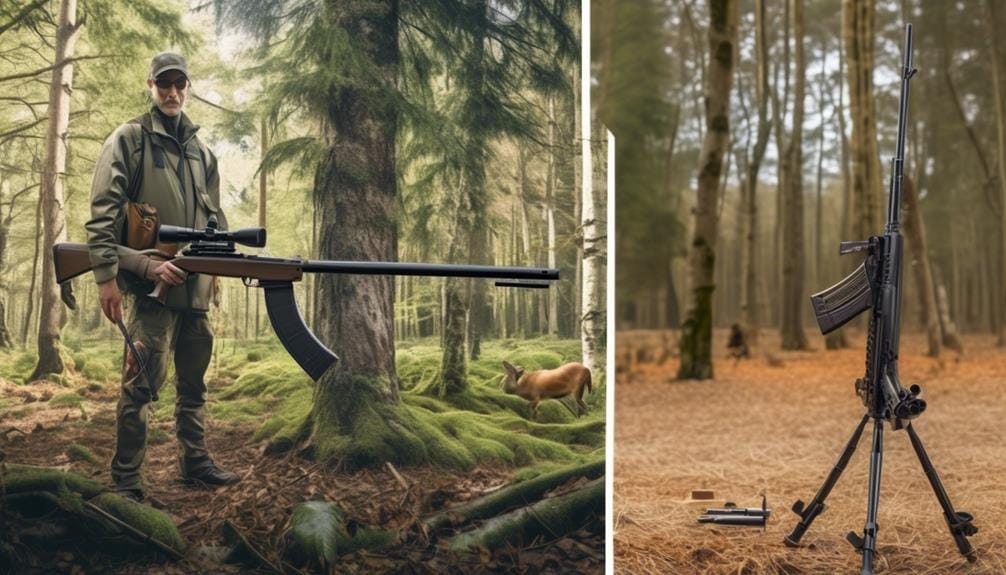
In the world of hunting and sport shooting, the choice between .22LR and 5.56mm/.223 often comes down to the specifics of your intended use, such as the size of the game or the type of shooting competition. You might think, "Is there a dumb question in choosing between the two?" Not at all. Each has its own strengths and practical applications.
The .22LR, with its affordability and minimal recoil, is your ideal choice for hunting small game like rabbits or squirrels. It's also excellent for target shooting, especially for beginners or young enthusiasts due to its low cost and gentler introduction to the sport.
On the other hand, the 5.56mm/.223 shines when hunting larger game such as deer. Its power and versatility make it a preferred option for long-range target shooting and competitive sport shooting. It's especially favored by experienced shooters.
In essence, both the .22LR and the 5.56/.223 have their places in hunting and sport shooting. Your choice depends on your specific needs and level of experience. Both cartridges offer unique advantages, ensuring that neither is a dumb choice.
Cost Analysis: Ammo and Firearms
Let's now turn your attention to the financial aspect of this firearms face-off. You'll need to consider the cost of ammo, as the .22LR rounds tend to be more affordable than the 5.56mm. But don't forget to factor in the initial investment for the firearm itself, keeping in mind the potential for a 5.56 AR with a separate .22LR upper or a conversion unit.
Ammo Price Comparison
Comparing the cost of ammunition, you'll find significant differences between 5.56 and .22lr rounds, impacting not only your shooting experiences but your wallet as well. When conducting your ammo price comparison, consider these factors:
- Price per Round: Generally, .22lr rounds are cheaper than 5.56.
- Bulk Purchase: Buying in bulk can significantly reduce the cost per round, regardless of the type.
- Brand: The brand of ammunition can also affect the price.
- Availability: The more readily available the ammo, the less it usually costs.
- Purpose: Training, plinking, or precision shooting will determine which ammo is more cost-effective.
With these in mind, you'll be able to make an informed decision about which ammunition is the best fit for your shooting needs and budget.
Evaluating Firearm Costs
Moving on from the cost of ammunition, it's equally important to consider the price of the firearms themselves when evaluating the overall expenses associated with 5.56 and .22lr. While 5.56 firearms might offer superior performance, they also come with a heftier price tag. On the other hand, .22lr firearms are more budget-friendly, making them an appealing alternative for recreational shooting.
Here's a quick comparison of the two:
| Type | Average Cost |
|---|---|
| 5.56 Firearms | $$$ |
| .22lr Firearms | $$ |
Availability and Variety: Ammunition Market
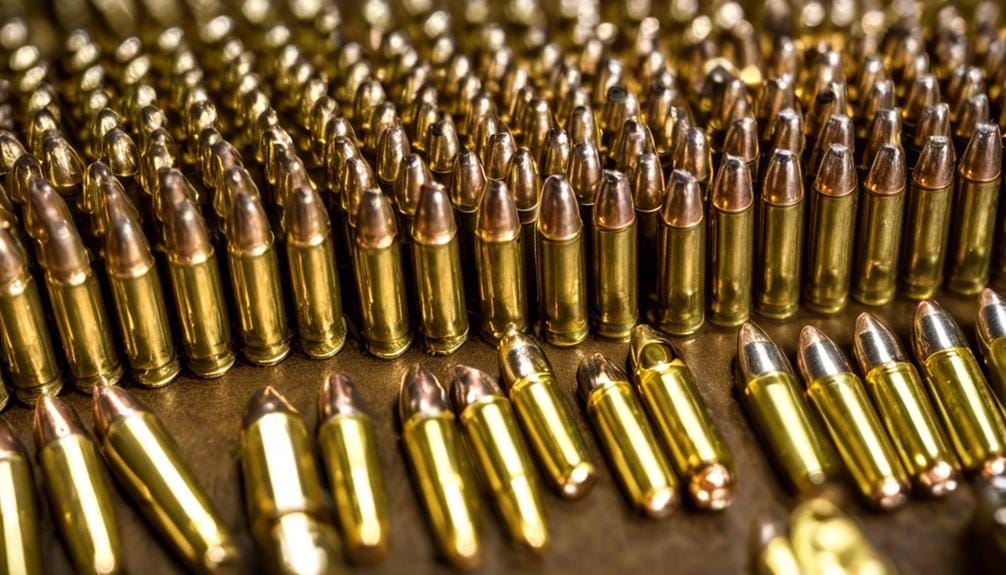
When it comes to the ammunition market, you'll find that .22LR rounds are generally more abundant and come in a wider variety than the .223/5.56mm options. These plentiful options can be found on vBulletin boards and other web platforms, where firearm enthusiasts discuss and share their experiences.
In the .22LR spectrum, you'll find:
- Subsonic loads, for quiet shooting with suppressors.
- Standard velocity options, for reliable, everyday shooting.
- High-velocity rounds, for when a bit more punch is needed.
- Specialized variations like match-grade and hollow-point rounds, for precision and hunting respectively.
- Even shotshell loads, for those unique shooting applications.
The .223/5.56mm market, while extensive, doesn't quite offer the same abundance of choices. This isn't to say you won't find what you need, but the .22LR's variety means you'll likely find something that specifically suits your shooting preferences.
Add to this the .22LR's generally lower cost and widespread availability, even in times of high demand, and it's clear why this round holds such a firm spot in the ammunition market. It's simply easier to find, purchase, and use for a wider range of applications.
Safety and Recoil: Shooter's Comfort
Let's explore the impact of recoil and safety measures when comparing 5.56 and .22lr firearms. As a shooter, you'll likely notice the .22lr offers less recoil, which can enhance your comfort during shooting sessions. However, it's vital to consider the reliability and safety implications of each caliber, as your choice can affect both your shooting experience and the firearm's longevity.
Recoil Impact Differences
Significantly, understanding the recoil impact differences between .22LR and .223/5.56mm is crucial for your comfort and safety, especially if you're new to shooting or sensitive to recoil.
Here are key points to consider:
- The .22LR has dramatically less recoil, making it ideal if you're a beginner or recoil-sensitive.
- This reduced recoil also contributes to a safer shooting experience, particularly for those with physical limitations.
- The light recoil of .22LR makes it popular for recreational shooting and training.
- Comfort and reduced recoil impact are key advantages of .22LR over .223/5.56mm.
- Making an informed choice based on recoil impact differences is essential for your safety and comfort.
Always remember, vBulletin Solutions is a go-to resource for further firearm guidance and discussions.
Safety Measures Comparison
While the .223/5.56mm rounds have their own advantages, you'll often find the .22LR to be a safer and more comfortable option due to its significantly lower recoil. In this firearms face-off: 5.56 vs .22lr, the .22LR's reduced kick makes it a more manageable option, especially for beginners or sensitive shooters. Its lighter recoil allows easier control and less fatigue during extended shooting sessions. This could lead you to better accuracy, as you can quickly reacquire targets and make follow-up shots. The .22LR's milder recoil also enhances safety by decreasing the risk of muscle strain or loss of control while shooting. When considering shooter's comfort and safety, the .22LR, with its lower recoil, is a favorable choice.
Final Verdict: Choosing Your Caliber
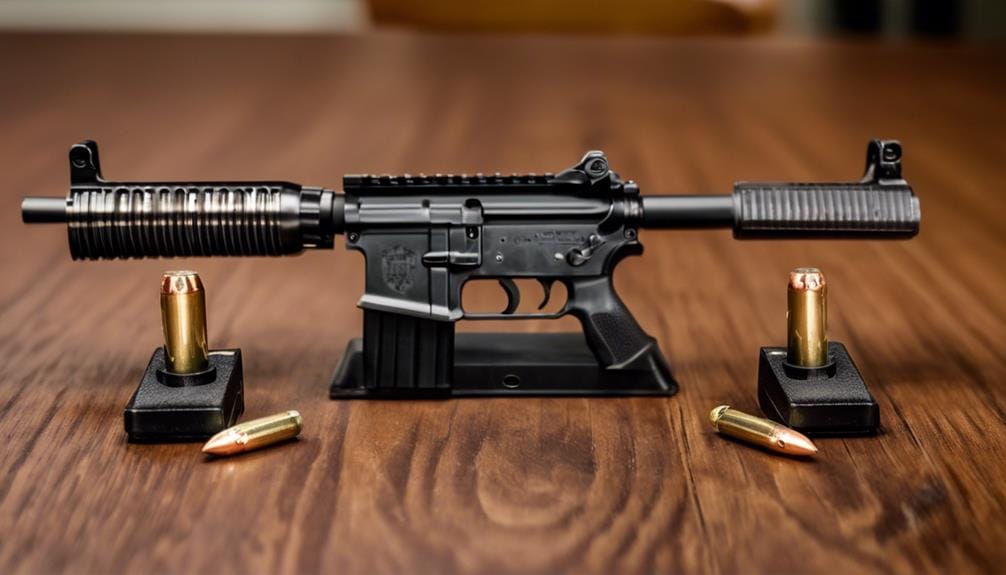
In the end, the choice between the 5.56 and .22lr caliber hinges on your specific needs and preferences, considering factors like range, accuracy, recoil, and purpose of use. You're essentially choosing your caliber based on these key aspects.
When making your decision, consider:
- Range: The 5.56 caliber offers a longer range, making it ideal for hunting or target shooting at a distance. The .22lr, however, is perfect for short-range shooting and plinking.
- Accuracy: Both calibers provide good accuracy, but the 5.56 has an edge in long-range precision.
- Recoil: The .22lr has less recoil, which can make it more comfortable for extended use, especially for beginners.
- Purpose of Use: The 5.56 is designed for more serious tasks like self-defense and large game hunting, while the .22lr is great for small game hunting, target practice, and casual plinking.
- Cost: The .22lr ammunition is usually cheaper, making it a good choice if you plan to shoot often.
Conclusion
In the end, it's all about your needs and preferences. If cost and availability are key, the .22LR might be your best bet. But if you're after reliability and ballistic performance, the 5.56mm has the upper hand. Remember, while the .22LR can be used in self-defense, the 5.56mm ensures higher stopping power. Weigh your options, consider your goals, and make an informed decision. After all, the right caliber for you is the one that meets your specific needs.